Use of Syndromic Surveillance During Epidemics and Pandemics
- Feb 22, 2025
- 2 min read
Updated: Mar 12, 2025
Syndromic surveillance is a vital public health tool used during epidemics and pandemics to detect, monitor, and respond to disease outbreaks in real time. 1 Unlike traditional disease surveillance, which relies on laboratory-confirmed diagnoses, syndromic surveillance collects and analyzes data from various sources—such as emergency department visits, pharmacy sales, and even internet searches—to identify patterns indicative of emerging health threats.
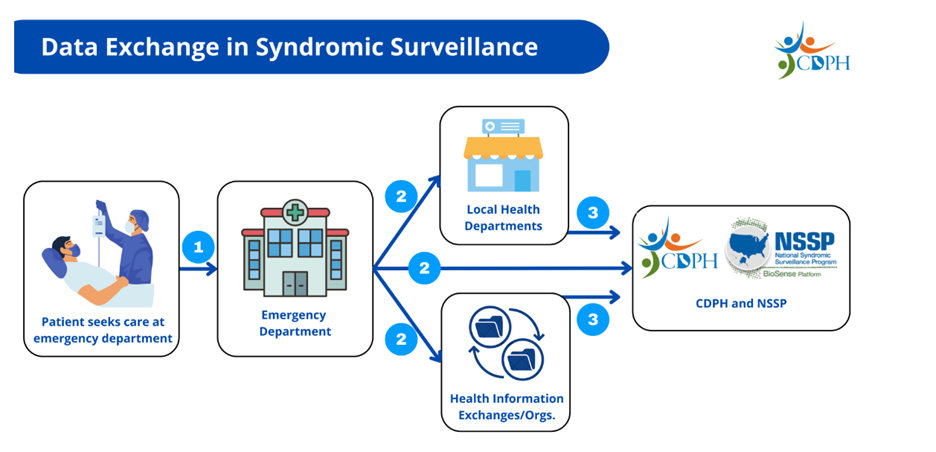
During the COVID-19 pandemic, syndromic surveillance played a crucial role in early detection, tracking disease spread, and guiding public health interventions. By monitoring symptoms such as fever, cough, and respiratory distress in emergency departments and urgent care settings, public health officials could identify spikes in potential COVID-19 cases before laboratory confirmations were available. This real-time data helped shape responses, including hospital resource allocation, public health messaging, and mitigation strategies like social distancing and mask mandates.
Syndromic surveillance also helped detect secondary impacts of the pandemic, such as increased mental health emergencies, delayed healthcare access, and the resurgence of other diseases due to disruptions in routine care.
Syndromic surveillance enhances epidemic and pandemic response by providing early warning signals and enabling proactive public health action. The CDC’s NSSP, ILINet, and other systems have proven crucial in tracking diseases like COVID-19 and informing mitigation strategies. As technology advances, integrating machine learning and artificial intelligence into syndromic surveillance could further improve outbreak detection and response.
National Syndromic Surveillance Program (NSSP)
A cornerstone of the CDC’s syndromic surveillance efforts, NSSP gathers data from emergency departments, urgent care centers, and other healthcare facilities across the U.S.
NSSP was instrumental in tracking COVID-19 trends, such as emergency visits for respiratory symptoms and loss of taste/smell.
FluView and ILINet (Influenza-Like Illness Surveillance Network)
While primarily designed for influenza surveillance, these systems were adapted to track COVID-19 trends.
ILINet collects data on patients presenting with flu-like symptoms, which closely overlapped with early COVID-19 symptoms.
Google Flu Trends and Other Digital Tools
While not directly operated by the CDC, digital tools like Google Flu Trends (before it was discontinued) and other AI-driven platforms helped analyze internet search behaviors to detect early signs of outbreaks.
Impact and Challenges
Syndromic surveillance has been invaluable in the COVID-19 response, offering early warnings and informing public health strategies. However, it comes with challenges, including:
Data completeness and quality: Variability in reporting across healthcare systems can impact accuracy.
False positives: Not all respiratory illnesses are COVID-19, making it essential to confirm trends with lab data.
Privacy concerns: Collecting real-time health data requires balancing surveillance with patient privacy protections.
*This post was created with insights from Perplexity AI, followed by author editing and fact-checking.
References:
Cases, data, and surveillance. (2020). Centers for Disease Control and Prevention. https://archive.cdc.gov/www_cdc_gov/coronavirus/2019-ncov/covid-data/covid-net/purpose-methods.html
Department of Public Health. (n.d.). What is Syndromic Surveillance? https://www.cdph.ca.gov/Programs/CID/OIDPR/Pages/Syndromic-Surveillance/What-is-Syndromic-Surveillance.aspx
ILINET State Activity Indicator MAp. (n.d.). https://gis.cdc.gov/grasp/fluview/main.html
National Emergency Department visits for COVID-19, influenza, and respiratory syncytial Virus | CDC. (n.d.). https://archive.cdc.gov/www_cdc_gov/ncird/surveillance/respiratory-illnesses/index.html


Comments